

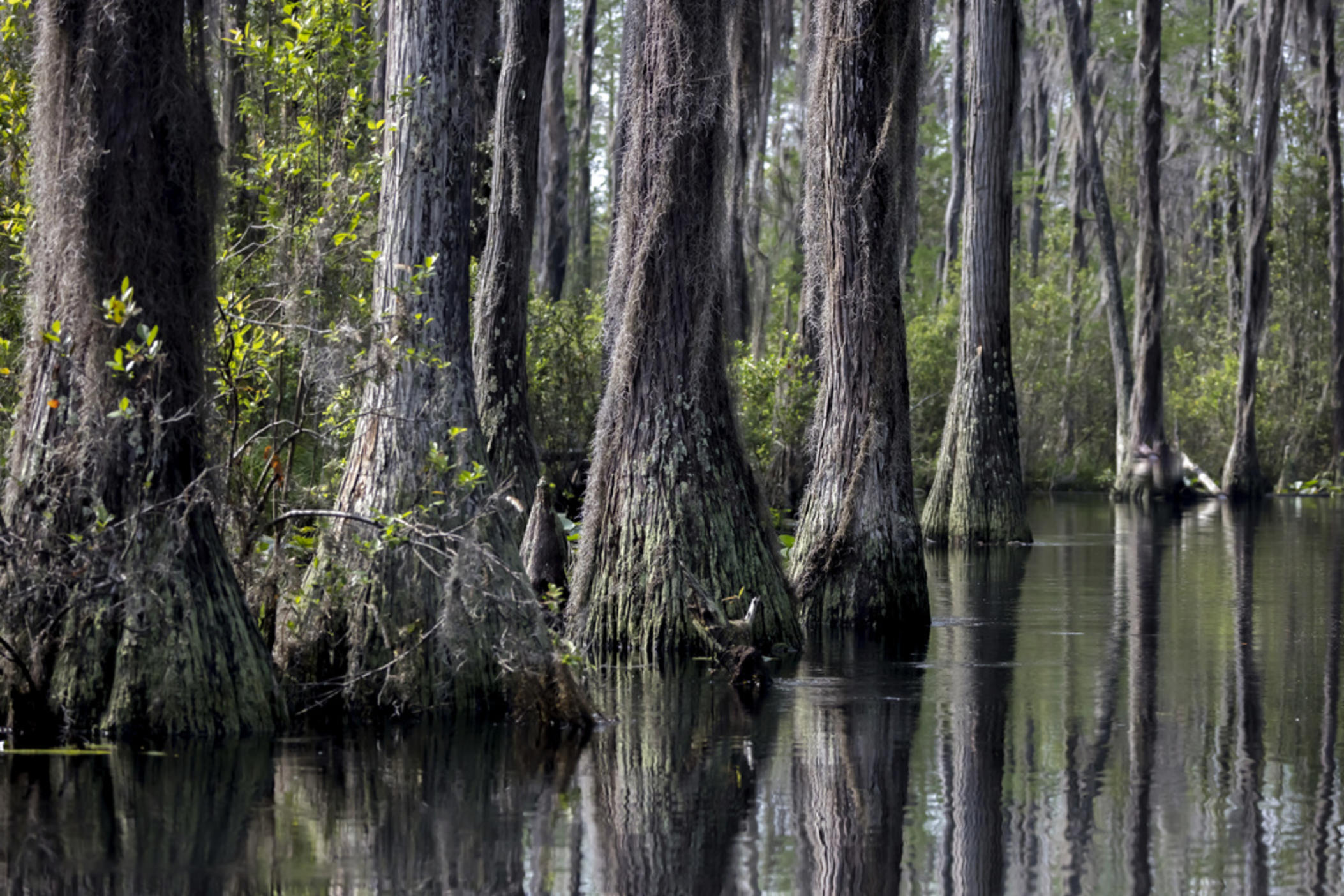
CHALLENGE: Understanding and protecting the 600-square-mile Okefenokee is vital. Regulators and others have worked under the belief that the Okefenokee Swamp is isolated from the aquifer below it. If this assumption is wrong – if the swamp and aquifer are connected – the quality and quantity of water in the swamp could be impacted by withdrawing water from the aquifer for agriculture and industry.
RESPONSE: Warnell School of Forestry & Natural Resources Professor Jaivime Evaristo tracks isotopes in water found in the Okefenokee Swamp and the Upper Floridan Aquifer. Using isotopic and hydraulic evidence, Evaristo shows that the Hawthorn Formation between the two bodies isn’t as impermeable as some think.
TEAM: Warnell School of Forestry and Natural Resources Professors Jaivime Evaristo and Rhett Jackson, as well Professor Emeritus Todd Rasmussen.
MORE INFO: Read a recent paper in IOP Science.