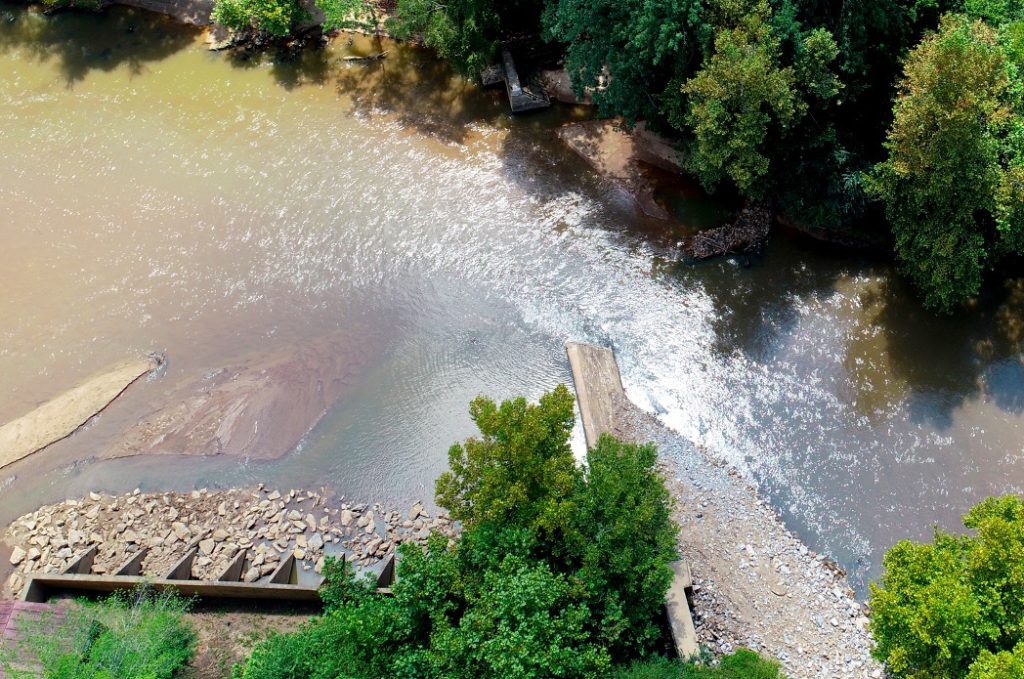
Fish passage describes the ability of fish to move freely through the river system to reach feeding, breeding, and rearing areas that are essential for sustaining healthy fish populations.
NOAA and other agencies can provide financial and technical assistance for locally-led projects that support safe, timely, and effective fish passage for critical species. Fish passage in a dammed river can be achieved through various approaches, including fish ladders, nature-like fishways, bypass channels, or partial or full dam removal. Projects to support fish passage can be designed to support community goals, increase economic opportunities, provide valuable environmental benefits, and improve flood protection. Investments in improving fish passage can simultaneously support thriving fish populations, local economies, cultural heritage, and ecological resilience for the benefit of local communities.
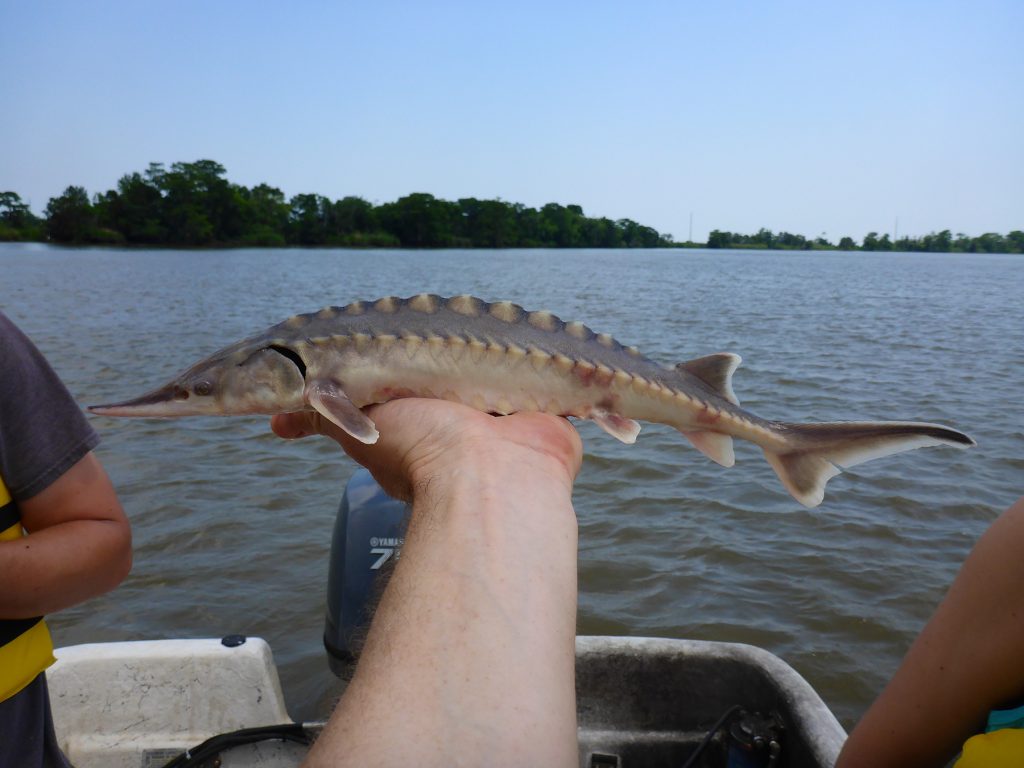
Juvenile Atlantic sturgeon/Photo Georgia Department of Natural Resources
Approaches for Fish Passage
Fish passage describes the ability of fish to move freely through the river system to reach feeding, breeding, and rearing areas that are essential for sustaining healthy fish populations.
There are multiple factors that go into selecting a suitable method to achieve fish passage including: biological, social, community, cost, and site feasibility. Below we provide an overview of three alternatives to full dam removal that can improve fish passage.
Fish Ladders
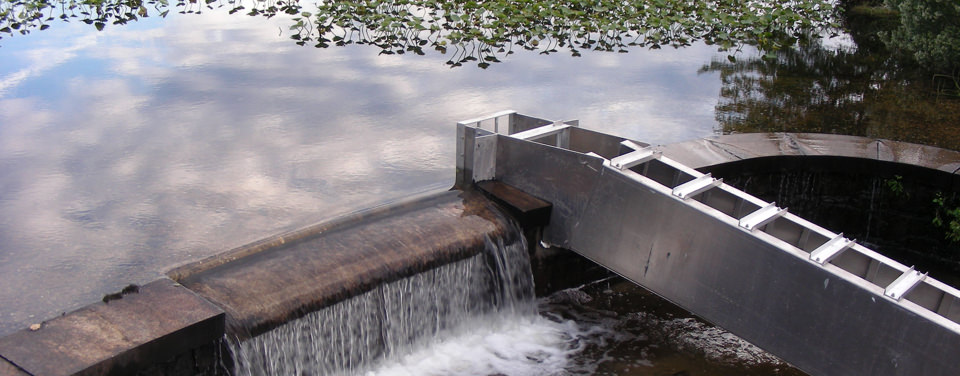
An engineered structure that allows fish to “climb” up by jumping or swimming up the gradually rising water levels. Fish ladders work best for strong-swimming fish species such as salmon.
Fish ladder near the south shore of Long Island/Photo: National Oceanic and Atmospheric Administration
Bypass Channels and Nature-like Fishways
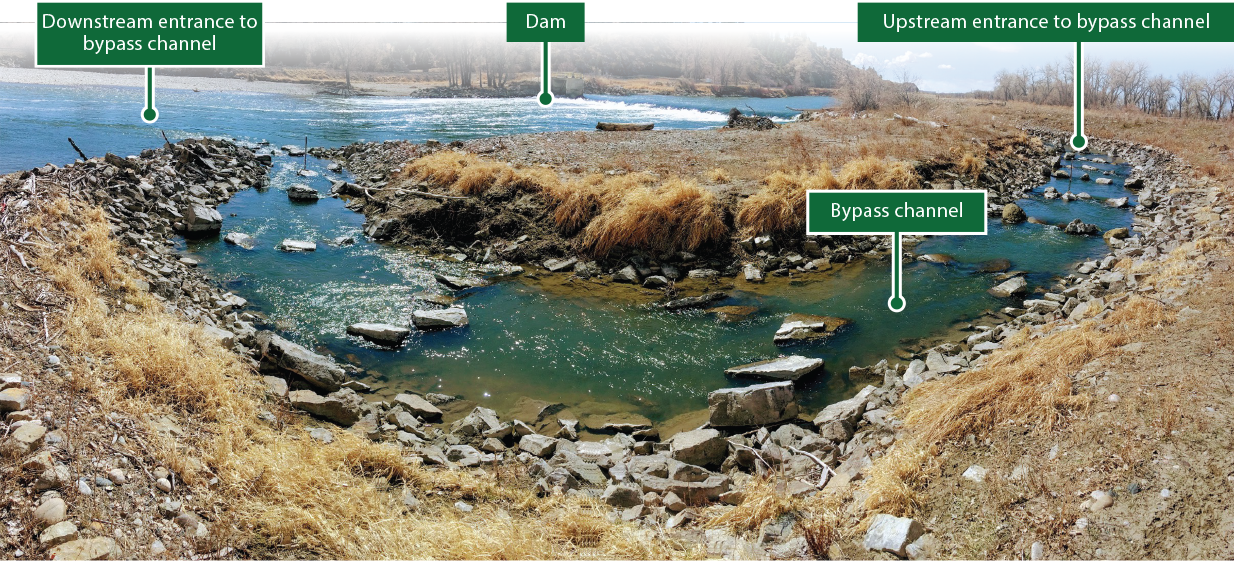
A bypass channel is an engineered channel that lets water and fish move around the dam entirely. Bypass channels that mimic the look and flow of a natural stream while carrying water and fish around the dam are called Nature-like Fishways.
Nature-like fishway on Yellowstone River/Figure adapted from USGS photo
Partial Dam Removal
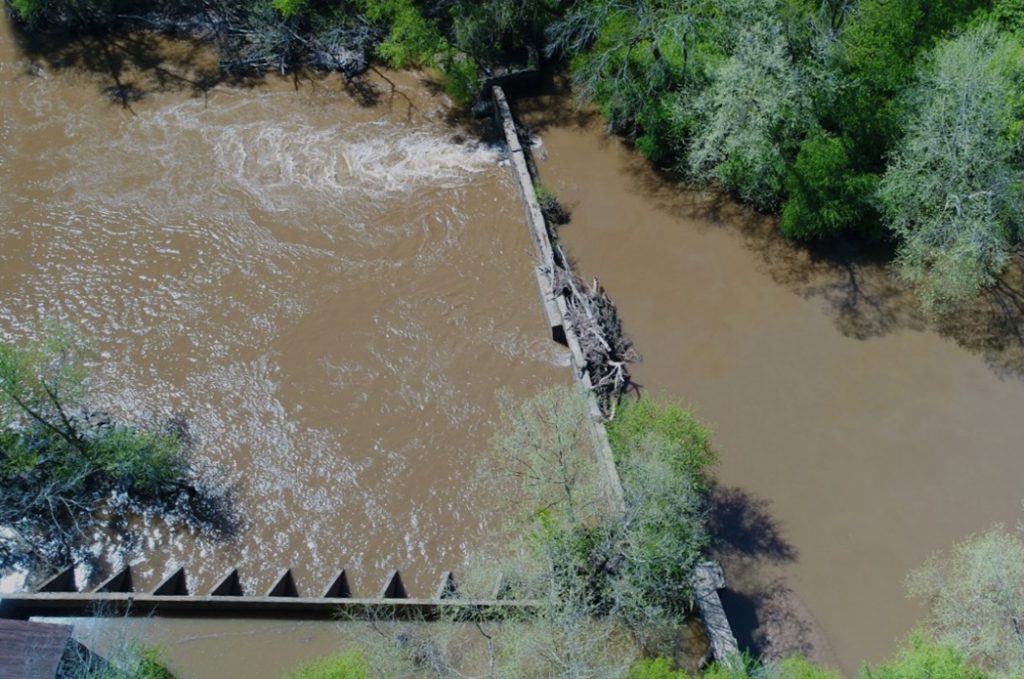
Parts of a dam are removed to restore natural river flow and allow for fish migration. Other parts of the dam are fortified in place to preserve the local history. Partial dam removal might look like the historic White Dam on the Middle Oconee River in Athens which was partially removed in 2018 to restore aquatic connectivity and improve recreational safety.
White Dam before/Photo: Tripp Lowe
White dam partially removed/Photo: Tripp Lowe
Additional Resources
Living With Dams: Know Your Risks
This pamphlet has information about living around dams, both large and small. While dams provide many services for communities, this resource can help to better understand the purpose of dams and associated risks for people.