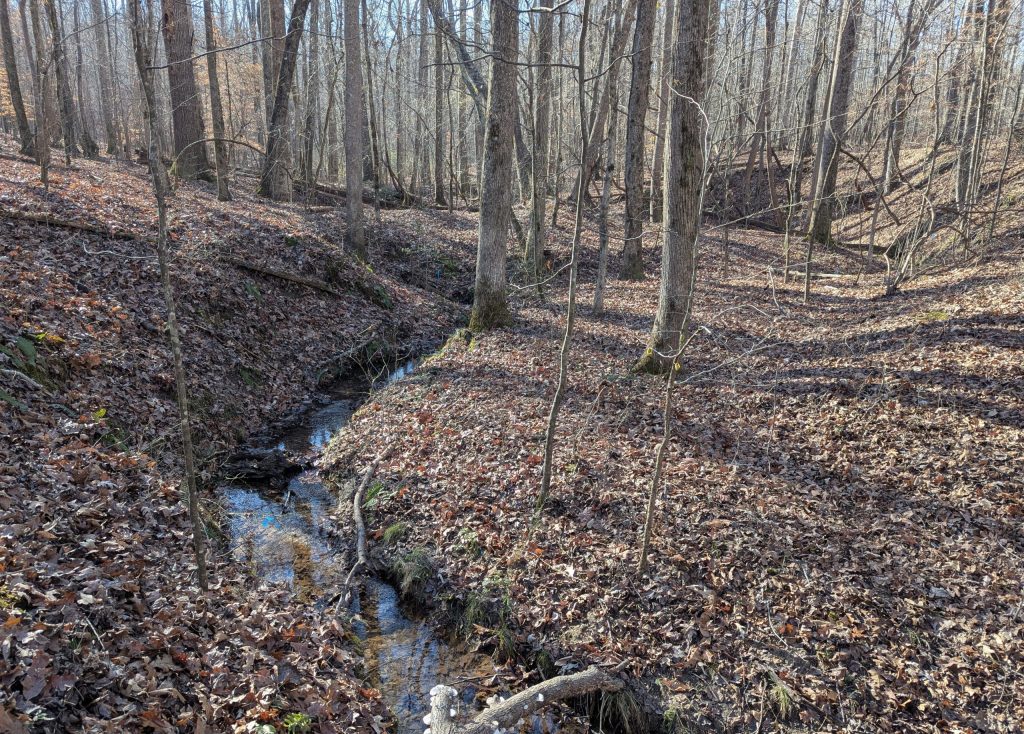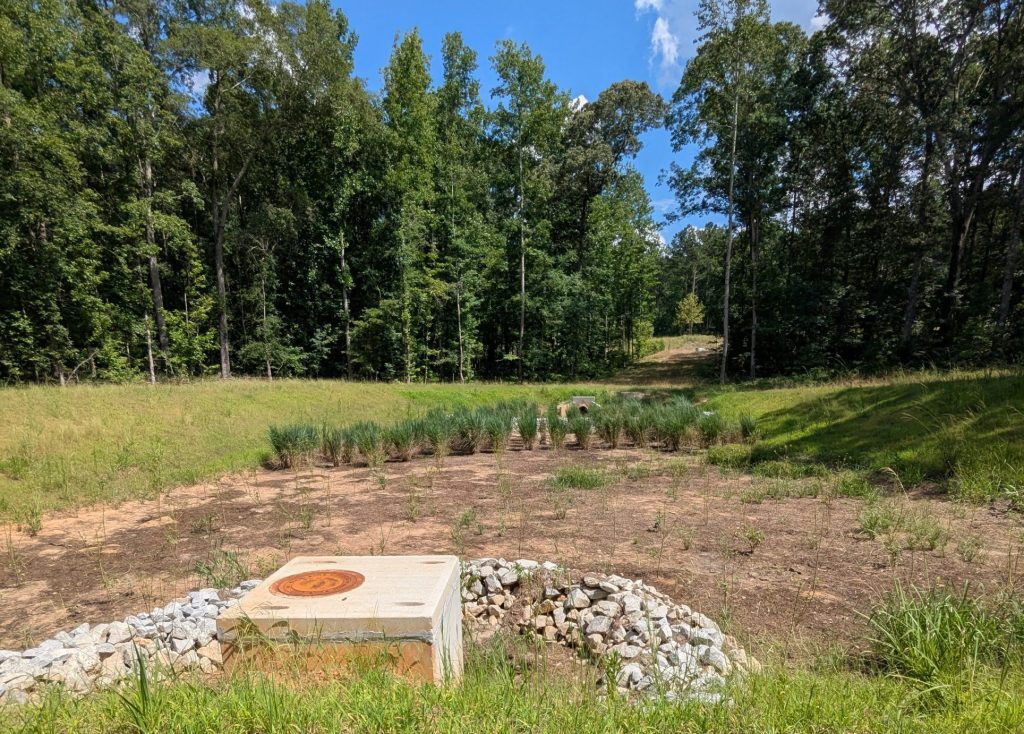
CHALLENGE: Urban development typically results in a suite of impacts to a watershed, including altered stream flow patterns and increased pollutant loads, that can reduce biodiversity and alter ecosystem functions such as pollutant uptake and removal. The Rowen Foundation is planning a 2,000-acre multi-use development in Gwinnett County that aims to foster advances in agricultural, medical, and environmental sciences and strives to be a model of sustainable development.
RESPONSE:
Supported by the Rowen Foundation and Georgia Power Company, a team of scientists, including researchers at UGA, Georgia Gwinnett College, and Spelman College, are studying how Rowen’s development affects physical and ecological conditions of aquatic ecosystems. The team is monitoring water chemistry, stream geomorphology and aquatic insects over a three-year period. The project provides research and professional experience for undergraduate and graduate students.
TEAM: The UGA team includes Seth Wenger, Charles van Rees, Krista Capps, Amanda Rugenski, and Phillip Bumpers of the Odum School of Ecology; Jon Calabria and Alfie Vick of the College of Environment and Design; and Rhett Jackson in the Warnell School of Forestry. The watershed project led by the Odum School is collaborating with other Rowen-supported projects including the HALOS project led by RBC affiliate Marshall Shephard in the Department of Geography.