

Irene Sánchez González
Aquatic Ecology
Odum School of Ecology
Personal website
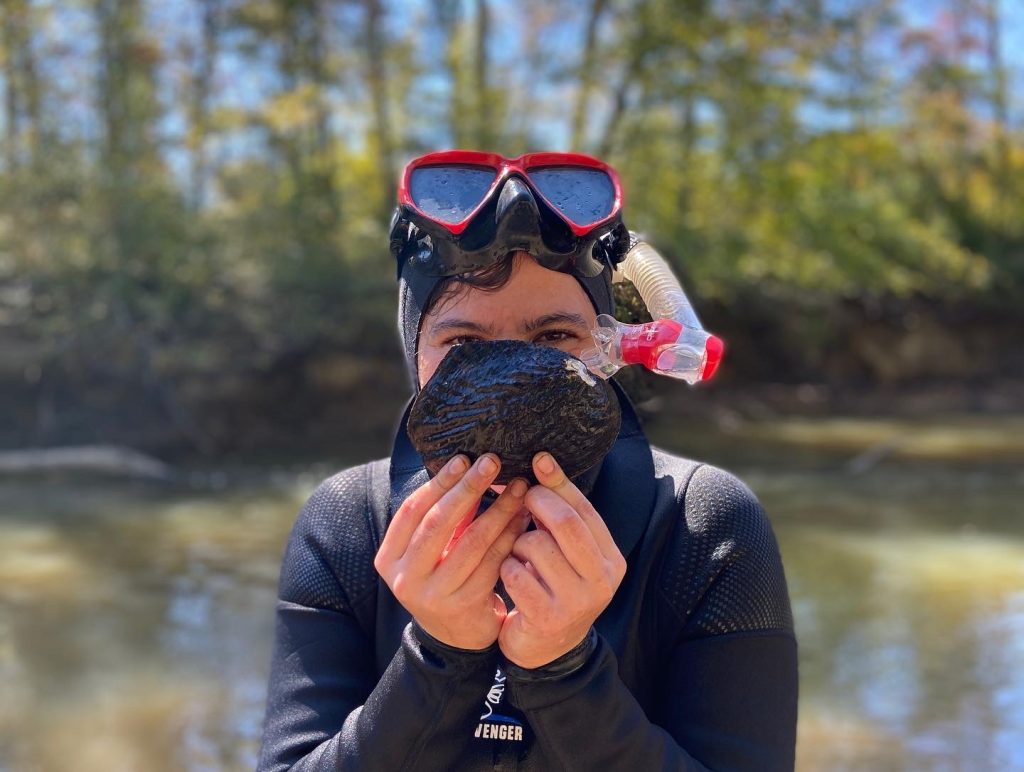
Irene Sánchez González is fascinated by freshwater mussels.
They look like lifeless rocks laying on the bottom of the streambed, but as prolific filter feeders, mussels perform a huge service, removing algae, bacteria and pollutants while stabilizing sediments.
And, though the adults are sedentary, they’ve found a way to spread their young around by attracting unsuspecting fish and attaching their larvae to the fish’s gills.
Not bad for a creature that hides in plain sight.
Originally from Spain, Sánchez came to Arkansas State University for a master’s degree and developed an interest in mussels and fish. She thought mussels would be easier to study, she jokes, because they don’t move much.
“I was wrong,” she said. “But, at some point, I realized that I really love working with mussels. I found them fascinating and I realized I am somehow good at identifying them.”
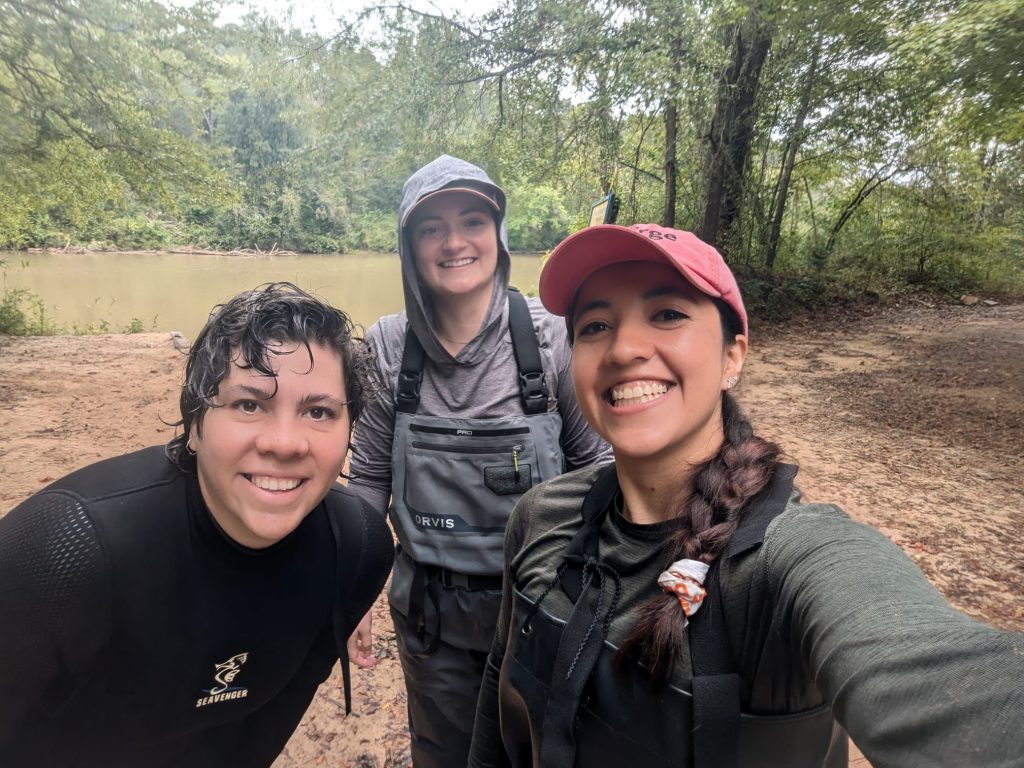
She based her PhD research at the University of Alabama on mussels and continues to investigate the creatures as a postdoc with the Odum School of Ecology and River Basin Center.
One of the most important aspects of mussels is their relationship with certain fish. Mussels rely on different species of fish to bring their young to adulthood and have evolved complicated systems to lure in host fish so that mussel larvae can attach to a fish’s gills while they grow for a few weeks.
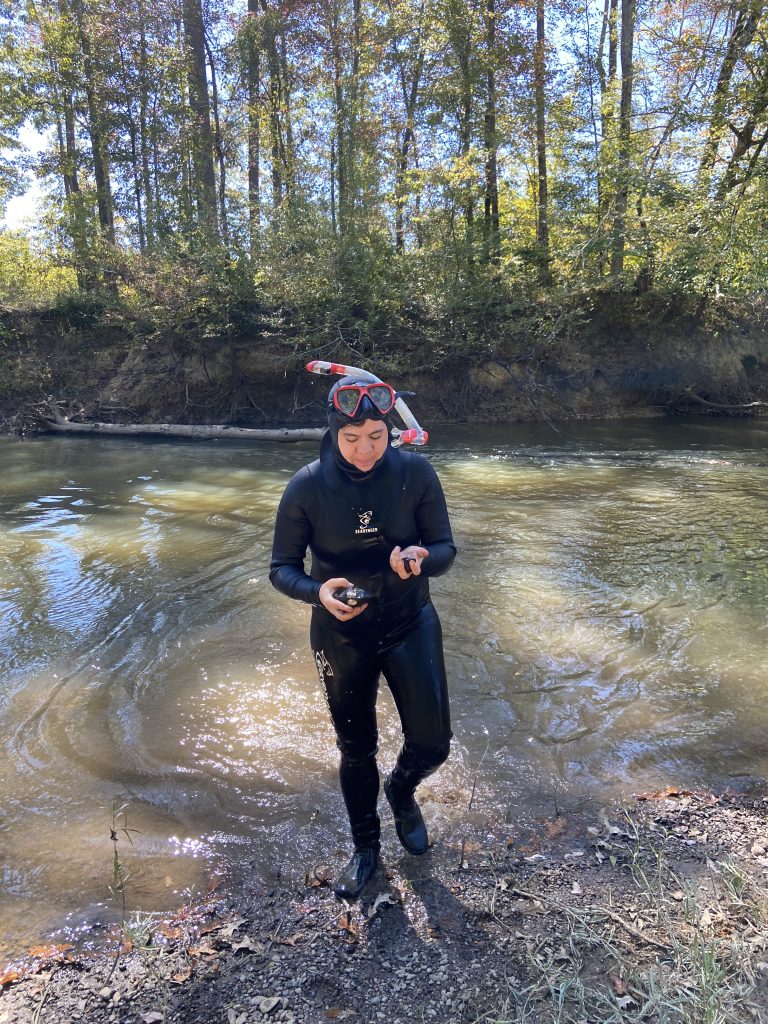
Understanding this relationship is critical for conservation planning, Sánchez said.
“It’s very important that we know which species of fish serves as a host for which mussel. If we have any conservation problems with the host, it’s also a conservation problem for the mussels, right?” Sánchez said.
Through host trials in the lab, ecologists can see what mussels and fish MIGHT share a relationship, but those manipulated tests don’t tell the full story.
“In the lab, a lot of things work. It’s very hard to find a fish that could not serve as a host. But in the field, that’s not necessarily the case.
“I’ve been working to put together a database where we can see the watersheds of the Southeast where a mussel species lives and then where the potential host fish also live. What I’m seeing is, there are a lot of potential host fish that we’ve tested in the lab that are not even in the same river as the mussel they were tested for.”
While poring over data on fish and mussels, Sánchez also consults with experts in more traditional parasite research—people like Andrew Park, a professor with dual appointments in the Odum School of Ecology and the Department of Infectious Diseases at the College of Veterinary Medicine.
“I’m trying to put together two worlds. People who work on mussels don’t really think like people who work on parasites, and we’re missing out on some of their methods and some of their literature,” she said. “I’m diving into some of that and learning a lot about parasites and how we can compare the relationship between mussels and fish to other parasitic relationships.”
Working with Seth Wenger, the director of science for the RBC, and Krista Capps, the RBC’s associate director, Sánchez has developed a Shiny app, an interactive tool for mussel conservation prioritization.
While fish will remain the more visible creature for conservation, mussels are a vital part of the overall health of a stream, Sánchez said.
Besides filtration, their feeding creates biogeochemical hotspots, concentrating nutrients that fish need. They also stabilize the stream bed, creating healthier habitats for plants and invertebrates. Eventually, they die and leave empty shells, adding habitat for macroinvertebrates.
“There are many practical reasons involving ecosystem health that should convince us to value mussels,” she said. “If you like fish, you probably should like mussels, too.”
Nature lovers from the Southeastern U.S. also can be particularly proud of the diversity of mussels in the region, which is home to the most diverse mussel population in the world.
“They might look like rocks, but mussels have a thousand different ways to look like a rock. They have different patterns, different colors on their shells. Some are super small (~2cm), and some are over 20 centimeters long,” Sánchez said.
When she speaks to property owners to get permission to access a stream, Sánchez tells them about the mussels in the area and many are surprised, even if they’ve lived on the land for decades.
“They don’t even know there could be 30 or 40 species right there,” she said.