
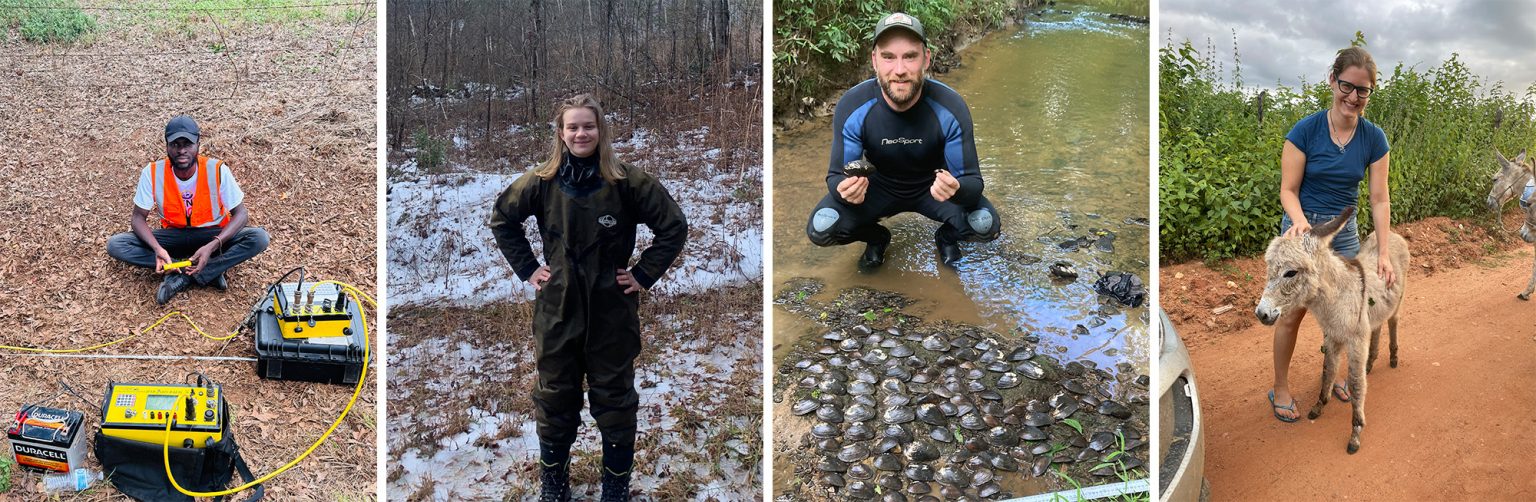
Through nearly a decade of awarding funds to graduate students, the John Spencer Grant program has enabled students from across the University of Georgia to conduct research touching on all aspects of water resources.
Student researchers have explored how long pyrogenic carbon persists in the soil, the life and needs of rare and endangered fish, the effectiveness of economic incentives and public education programs to preserve water resources, legal questions involved in buyout programs after natural disasters and more.
The research questions, pitched by students as they apply for funding, touch on waters from small streams in Athens’ backyard to major watersheds around the world.
Students have used the funds to cover expenses needed to conduct and present research – costs like travel and hiring assistants – producing important research findings, even as they pursue a degree.
Since the grants began, the RBC has given awards to 27 students in seven different colleges or departments, including the College of Agricultural and Environmental Sciences’ economics and soil science departments, Franklin College’s departments of Geology and Anthropology, and the College of Engineering, as well as Odum School of Ecology and Warnell School of Forestry and Natural Resources.
The John Spencer Research grants were inaugurated in 2016 with a generous donation from Kathleen Amos in memory of her son, John Spencer, a beloved master’s student at the River Basin Center and Odum School of Ecology. Ongoing support for these annual awards comes from donations. Applications are open to all graduate student affiliates of the River Basin Center.
Here are a few of the students who have used Spencer Grants and what they are up to today:
Kwaku Asiedu, master’s degree, Department of Geology
2024 Spencer Grant
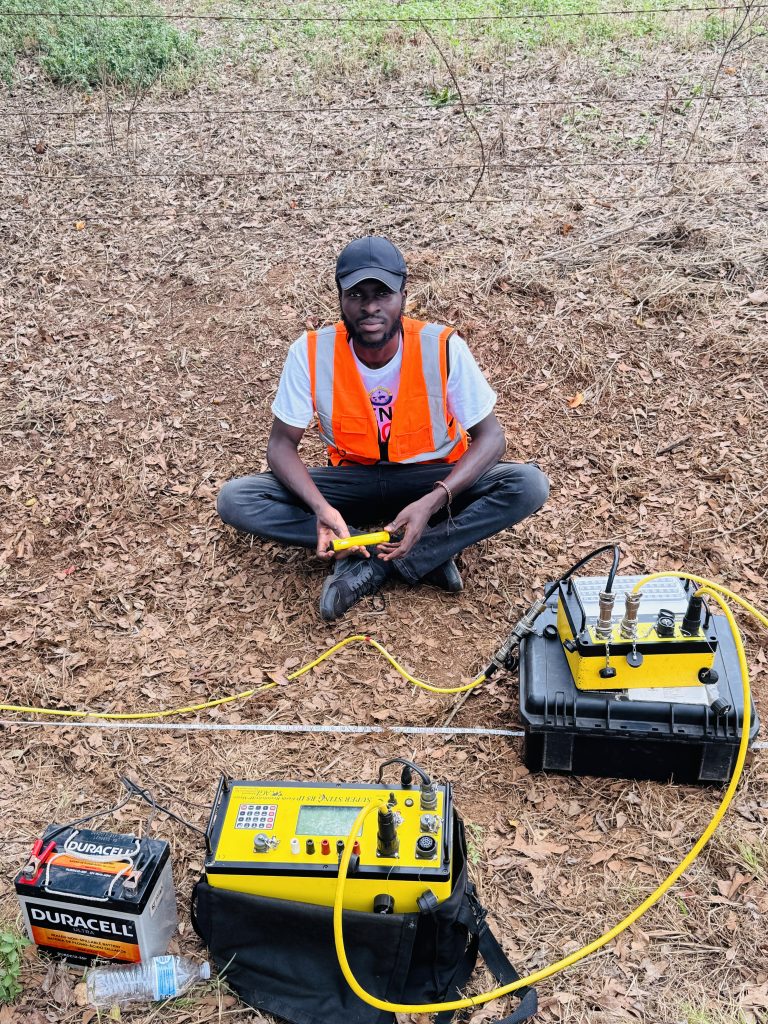
Originally from Ghana, Kwaku Asiedu came to the U.S. to work toward a master’s degree in geology through the Franklin College of Arts and Sciences. His research used Electrical Resistivity Tomography (ERT), computational modeling, and borehole geophysical logging to better understand subsurface fracture characteristics and their influence on groundwater recharge and aquifer connectivity.
Spencer Grant funding supported his data collection in southwest Georgia and helped him receive training in specialized software used to process the ERT field data. The funding also allowed him to present research at the American Society of Geophysics (AGU) annual conference in Washington D.C.
“This grant helped fill a key gap in my funding, allowing me to carry out portions of the work that would have been difficult otherwise,” he said.
“One of the most interesting findings from my research was correlating mapped lineaments on the surface with potential subsurface fracture networks,” he said. “Though the survey could not probe to deeper depth, an extension of this fracture within the subsurface may indicate a potential hydraulic connection between the Ocala limestone and Claiborne aquifer. This insight has broader implications for how we manage groundwater resources in karst terrains.”
Asiedu is now pursuing a PhD in geology and researching reservoir modeling of CO₂ injection into deep saline formations, with applications for carbon storage and geothermal energy.
Michael Baker, PhD, Warnell School of Forestry and Natural Resources
2024 Spencer Grant
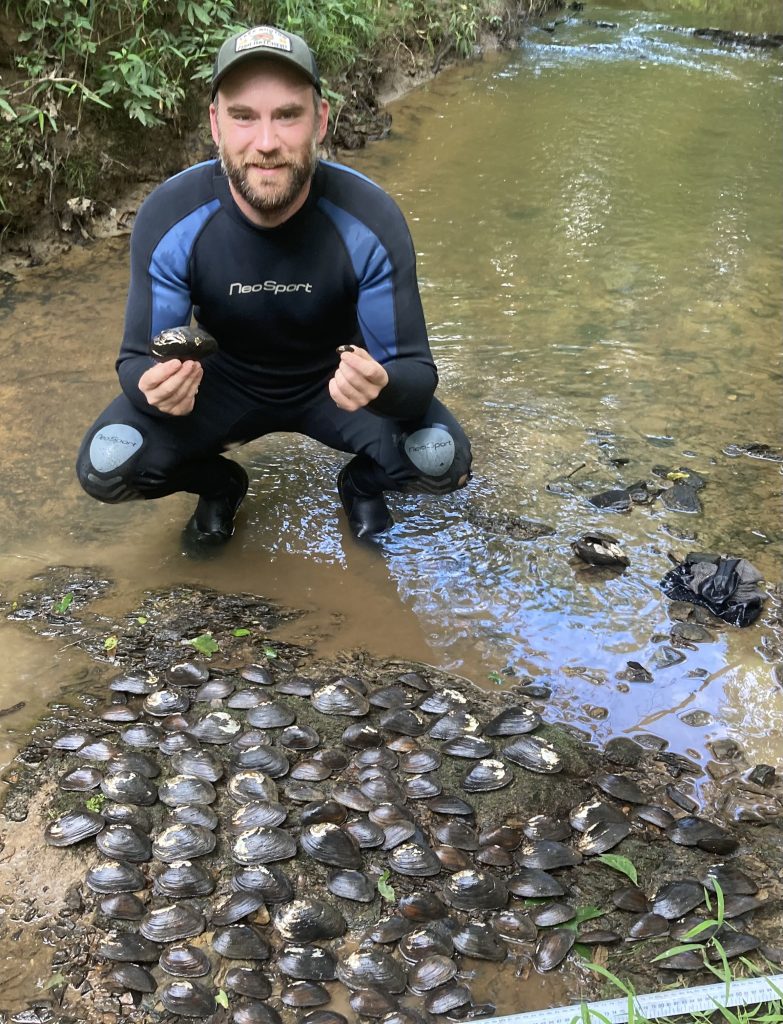
Michael Baker completed two master’s degrees—forestry and natural resources and then statistics—before starting a PhD at Warnell. He plans to graduate in May.
The research for his PhD focused on a state-listed species of freshwater mussel, called the Brook Floater (Alasmidonta varicosa) that lives along the East Coast of the US and Canada.
Baker is estimating demographic parameters for populations of Brook Floaters both in the Northeast and the Southeast. He also is using data simulation to develop improved sampling methodologies for freshwater mussels in general.
“Mussels tend to be patchily distributed, low in number, and elusive (mostly buried in the stream substrate) so some of the modeling approaches that we use on lots of other taxa can have additional complexities when used for mussels,” Baker said.
Mussels also aren’t a high priority for funding, so many common sampling techniques in the fish and wildlife worlds just haven’t been practiced much on mussels.
Baker used Spencer Grant funding to attend meetings where his presentations won awards:
- Georgia Chapter American Fisheries Society (2nd place Best Student Oral Presentation)
- Southern Division American Fisheries Society (1st place Best PhD Student Paper)
- Freshwater Mollusk Conservation Society Meeting (2nd place Best Student Oral Presentation)
“One of the most interesting aspects of this research to me is how it can be used by managing agencies to design monitoring programs which actually will be able to answer the biological questions that they set out to answer,” Baker said. “There’s broad agreement in the wildlife/fisheries fields that techniques like power analysis are really useful in determining how to design studies and determining how much sampling needs to take place to get robust answers, but in practice they are actually used very infrequently. As a result, lots of monitoring is done without enough thought on the front end to make sure that the sampling design will be capable of answering the research questions with the precision that is needed to drive management action.
“I think moving forward, this will be a bigger and bigger issue in our fields as funding sources become more scarce and harder decisions have to be made about how to prioritize research resources.”
Baker has started to look for jobs and is pursuing a position as a biometrician or statistician for a state or federal agency working with wildlife and fisheries data. “Particularly, I am interested in sampling design questions and how we can balance the need for statistically rigorous studies with the unique logistical challenges that arise in each of our natural systems,” he said.
Emily Chalfin, master’s degree, Odum School of Ecology
2025 Spencer Grant
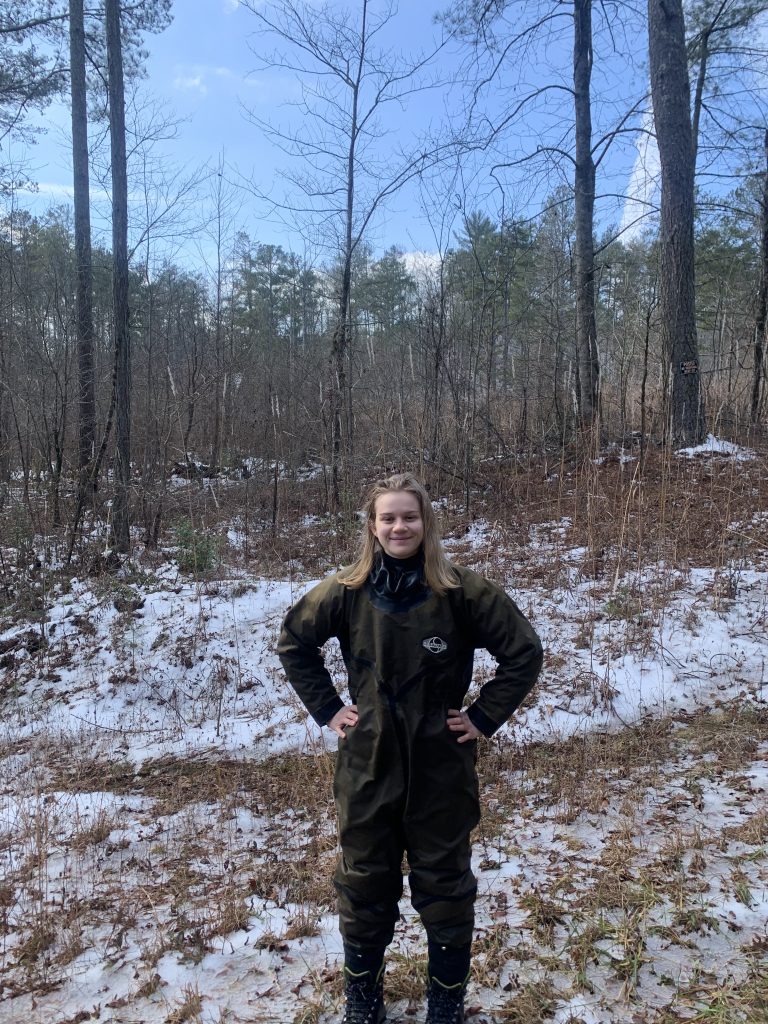
Chalfin came to the University of Georgia as staff, not as a student.
From Natick, Mass., Chalfin did her undergraduate degree at the University of Massachusetts, Amherst, where she met UGA-alum Allison Roy, who recommended her for a research technician job with the River Basin Center in 2022. From there, she stuck around to get a master’s degree.
Chalfin’s research involves describing the habitat use and modeling the distribution of the Etowah Bridled Darter, a species that first was described four years ago and named Percina freemanorum in honor of ecologists Bud and Mary Freeman.
This newly-described species is found only in the Etowah River basin in Georgia. Although it is on the state list of endangered species and is under consideration for federal protected status, its conservation is hampered by a lack of information on what the species needs to thrive.
Chalfin and her advisors worked with the Georgia Department of Natural Resources and the Tennessee Aquarium to identify the most pressing research needs, then snorkeled all the places with known Etowah bridled darter populations.
The Spencer Grant allowed her to hire an undergraduate student, Emma Mainer, to assist her in the field.
“Not only was this money crucial for me finishing my field season, but it also provided Emma with her first ever technician job and gave her excellent research and field experience,” Chalfin said.
“We found that the Etowah Bridled Darter is very limited in its distribution, probably due to human impacts,” she said. Her findings add to evidence from other studies to show that the minnow is less of a habitat generalist than previously thought.
Along with her in-stream observations, Chalfin built a species distribution model to determine which watershed characteristics (such as elevation and historical agriculture) are important to the fish.
“Using the two scales together, we were able to strengthen the modeling and practically link our visual observations to management,” she said. “An additional element to the work is evaluating how these two scales of study can complement one another. Neither approach is novel but it is useful to use them together.”
Chalfin defended her thesis this semester and is exploring both jobs and a potential PhD degree.
Cydney Kate Seigerman, PhD in Integrative Conservation & Anthropology, UGA Graduate School
2018 and 2022 Spencer Grant
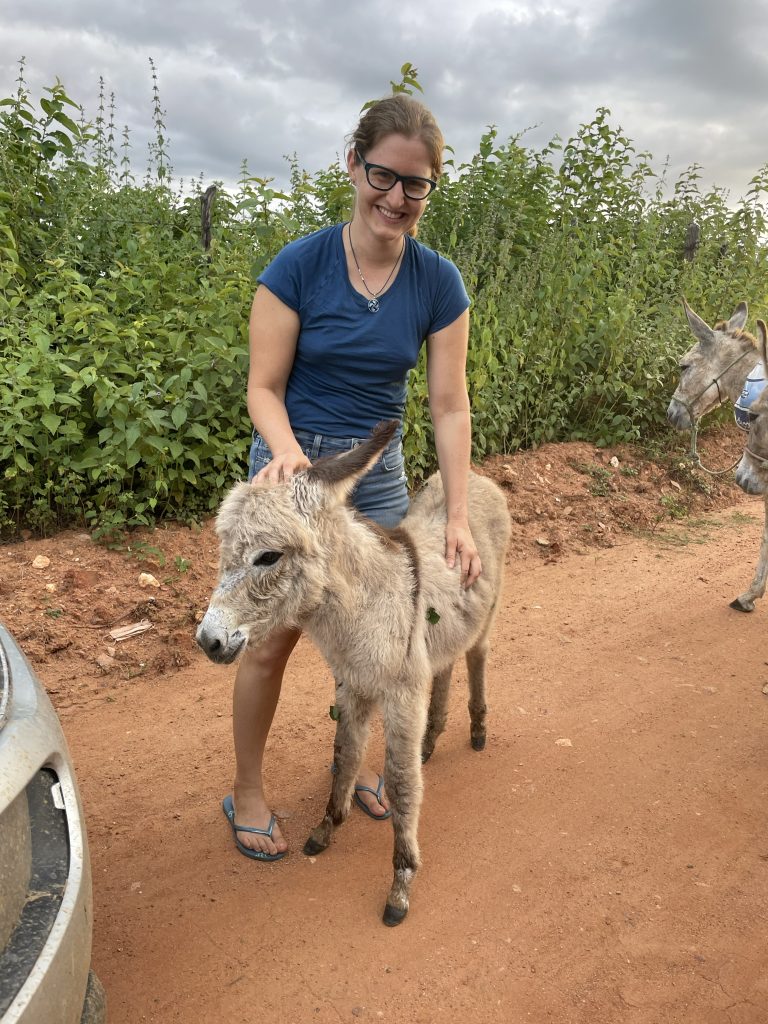
An anthropologist, Cydney Kate Seigerman studies how human behavior affects and is affected by water laws and agricultural systems. They conducted their PhD dissertation research in Brazil.
“My research integrates approaches from the sciences and arts to examine the dynamics of environmental policy and human behavior at the nexus of food and water,” they said.
Seigerman was awarded two Spencer grants—in 2018 to support preliminary fieldwork and in 2022 to support dissertation research—related to bulk water allocation in the Jaguaribe Valley, Ceará, Brazil.
In their PhD work in the Jaguaribe Valley, Seigerman observed meetings and interviewed technical experts at the State Water Resources Management Company (COGERH). They learned that, while the State had a significant say in how water was allocated, a new working group gave others some influence. The research contributed to a study with colleagues at the University of Michigan, Rio de Janeiro State University, and the Federal University of Paraná in Brazil that illustrated the complex relationship between democratic participation and the use of technical knowledge in decision-making to shape drought response.
They also learned about water-related inequality in Ceará, which motivated their dissertation. That work integrated mixed-method social science research, hydrological studies, and community-engaged theatre to examine the sociopolitical, technological, and environmental determinants of rural household water insecurity.
Their work highlighted the importance of public policies that incorporate local knowledge, such as the use of rain-harvesting cisterns, to improve household water security.
As a PhD student, the Spencer Grant supported six weeks of field research in Brazil, funds they augmented with a field research travel award from the Latin American and Caribbean Studies Institute at UGA and a small grant from the Department of Anthropology.
In 2022, the Spencer Grant covered some of the costs associated with household water insecurity survey, specifically allowing them to rent a car to apply the survey with households in rural communities across the region.
“One of the most impactful findings for me was that, while there is still much work to be done, household water security in rural Ceará has greatly improved over the past two decades thanks to public policies and programs, particularly programs to build household rainfed cisterns,” Cydney said. “Throughout my research, I witnessed the joy that rural families felt thanks to having a reliable source of high-quality water yearlong.”
Today, Seigerman is a postdoctoral associate in the Social Sustainability of Agrifood Systems Lab under the direction of Dr. Jennifer Jo Thompson, researching the dynamics of on-farm research and the adoption of sustainable agricultural practices by U.S. cotton farmers.