




Temperature-dependent sex determination, a trait present in many reptiles, could hold evolutionary significance linked to the species’ survival, according to a study from the University of Georgia.

College of Public Health professor and affiliate Erin Lipp has been appointed to the Georgia Power Professorship in Environmental Health Science. The professorship was created, with support from Georgia Power Company, to recognize excellence in environmental health science research and mentorship.

In May of 2023, Wendy Paulsen retired from UGA, stepping down from her long-time position as office manager of the River Basin Center.

When small hydroelectric projects began dotting the rivers of the Western Ghats, a strip of mountains that runs parallel to the west coast of Peninsular India, Odum and Integrative Conservation (ICON) graduate student Shishir Rao pivoted from a career in IT to study their impact.

A team from the U.S. Army Corps of Engineers and the University of Georgia recently published “Nature-Based Solutions for Biodiversity,” a handbook that uses landscape architecture renderings to demonstrate how communities can use nature-based solutions to protect their communities while promoting biodiversity.

River Basin Center affiliate Marshall Shepherd was recently named the recipient of the prestigious 2023 Environmental Achievement Award.

Meet Carissa Bogan, the River Basin Center’s fall 2023 intern.

Steffney R. Thompson will lead the School of Law’s new Land Conservation Clinic (a refocused version of the Environmental Practicum). The clinic will be an interdisciplinary collaboration between the law school and Odum School of Ecology working at the nexus of law, science and policy to support and expand conservation efforts across Georgia and the Southeast.

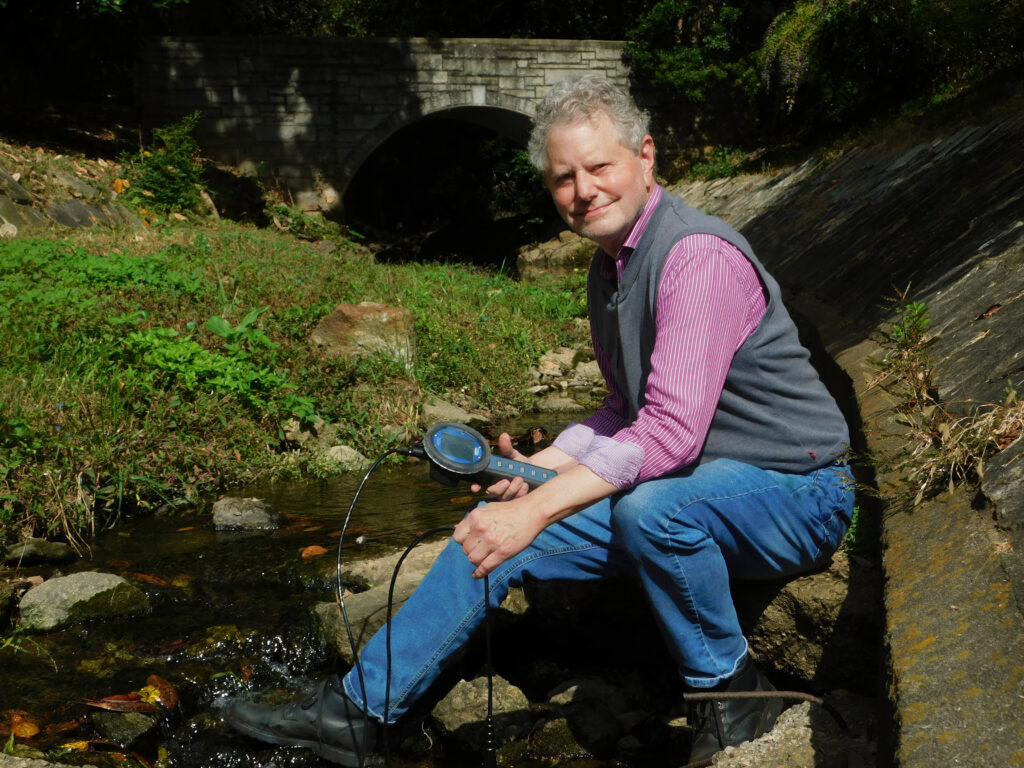
River Basin Center intern Gabriel Stephenson captured footage at Tanyard Creek to highlight an urban freshwater ecosystem running right through UGA’s campus.

The River Basin Center invites UGA graduate students who are conducting water science or policy research in any field to participate in a poster contest, Confluence: UGA Water Science & Policy Poster Symposium. The contest and following social will be held from 3 to 5 p.m. Oct. 20 at the UGA Special Collections Library, Banquet Room 285.