
Affiliate Charles van Rees spoke with the Freshwater Blog about how nature-based solutions can benefit freshwater biodiversity.
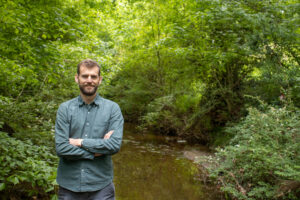
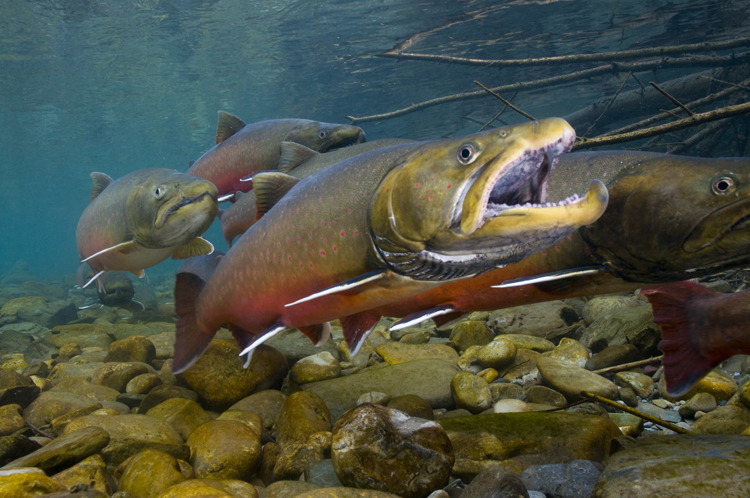
Development threatens Georgia’s biodiversity, and projects designed to offset harm may not have a lasting positive impact on fish, according to new research from a team of University of Georgia researchers.
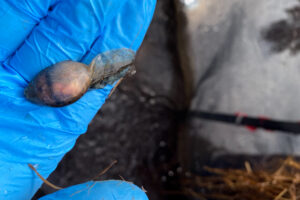
As the longleaf pine ecosystem becomes smaller and wildlife populations become more isolated, amphibians face many challenges. Among these are disease and habitat fragmentation, which are more relevant now than ever. Since April of this year, frogs that rely on these wetlands have been dying at alarming rates in some regions. The amphibian infection and mortality event appears to be widespread, according to University of Georgia researchers and their collaborators.
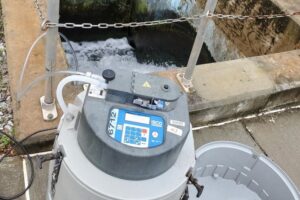
Affiliates Gary Hawkins and Ke (Luke) Li collaborated on a study to develop improved, cost-effective treatment systems with advanced technologies for removing polyfluoroalkyl and perfluoroalkyl substances (PFAS) from water, wastewater and biosolids.
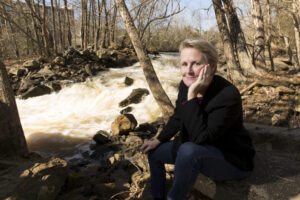
Affiliate Catherine Pringle, a distinguished research professor at UGA, has had a decorated career, from earning UGA’s creative research medal to publishing 197 peer-reviewed journal articles, over 50 book chapters and symposium proceedings, and co-editing three books.
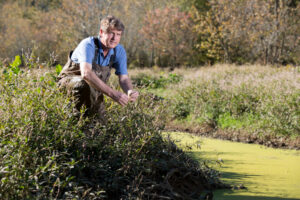
Aquatic entomologist and River Basin Center affiliate Darold Batzer and other researchers from the Department of Entomology in the College of Agricultural and Environmental Sciences have spent their careers discovering how factors like climate change, pollution and urbanization impact insects. Uncovering changes to the well-being of insects provides clues to the drivers behind changes in entire ecosystems.
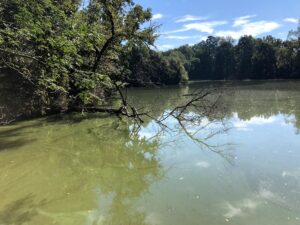
All scientific research is collaborative, but this group of River Basin Center affiliates exemplified why interdisciplinary work is so important- with compelling results for freshwater policy. The Odum School of Ecology’s Rosemond Lab teamed up with policy experts to evaluate the efficacy of policies to reduce nutrient pollution.
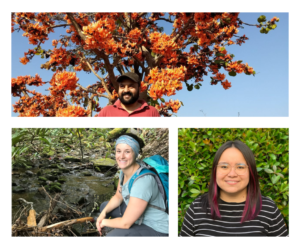
The River Basin Center is proud to announce that Fabiola Lopez Avila, Carolyn Cummins and Shishir Rao have been awarded John Spencer Research Grants for
A team of researchers helmed by Sechindra Vallury was awarded a pre-seed grant by the UGA Office of Research and the Office of the Provost. Other team members include affiliates Donald Nelson of the Franklin College of Arts and Sciences, Emily Bell, of the School of Public and International Affairs, John Schmidt from Odum, and Daniel Markewitz of the Warnell School of Forestry and Natural Resources.
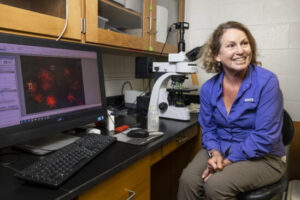
Affiliate Susan Wilde was awarded a Creative Research medal. The university established the Creative Research Medals in 1980 to recognize a distinct and exceptional research or creative project, performed by a mid-career faculty member, with extraordinary impact and significance to the field of study.